

Blog Research
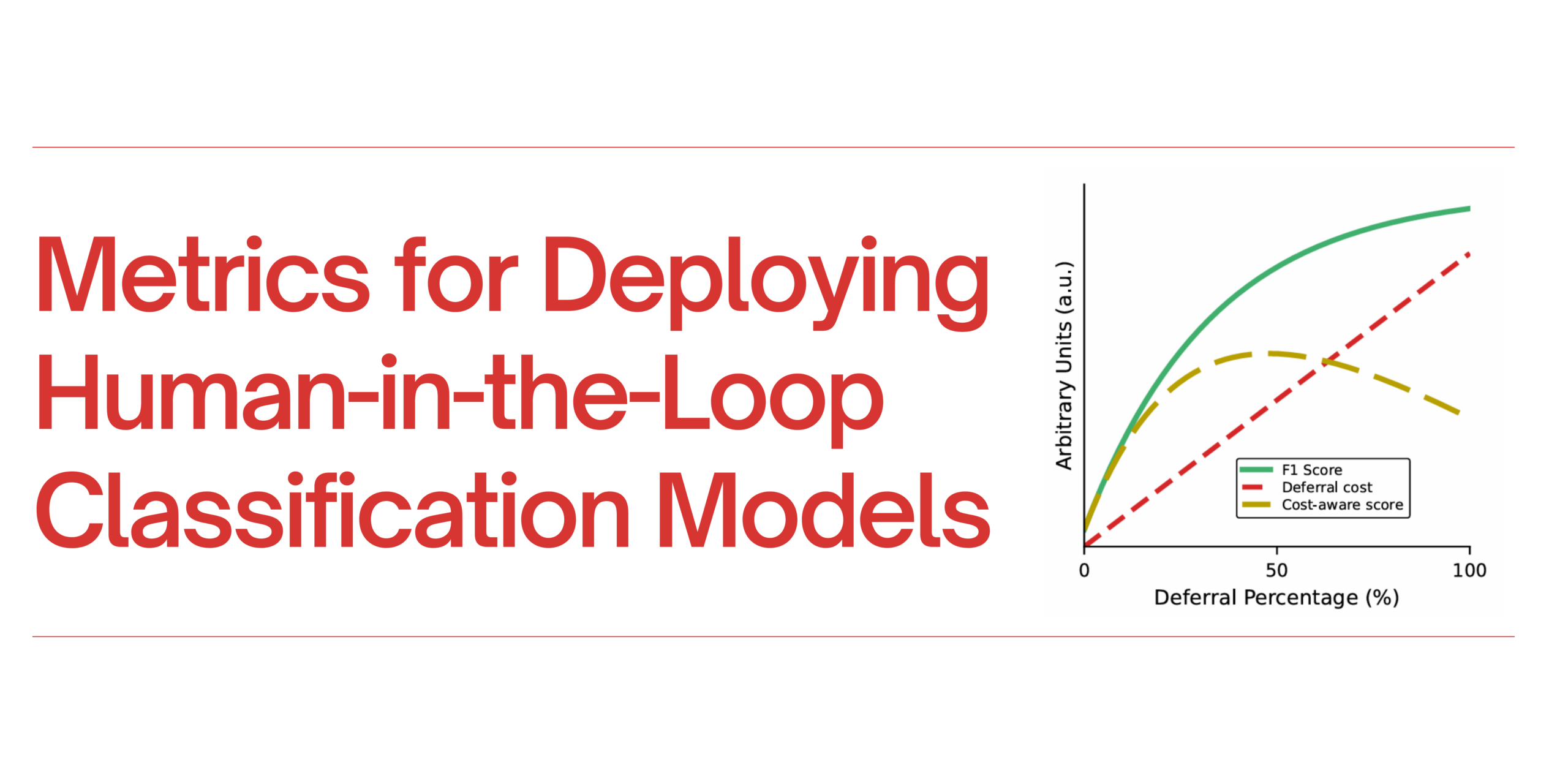
Better metrics for human-in-the-loop AI: our research at BNAIC 2026
Human supervision, measured properly Many AI systems are not allowed to decide on their own. Uncertain predictions go to a human expert for review, yet we still choose models using metrics that assume the AI makes every decision itself. Together with Code4Thought, we wrote a research paper on this gap: Metrics for Deploying Human-in-the-Loop Classification…
Deniz Sevim
Expanded View of Non-nativeness in Cyber Risk Perception
Smeal, W., Camp, L. J. and Păunescu, M. 2026. Expanded View of Non-nativeness in Cyber Risk Perception. Computers and Society Research Journal (2026), 1 DOI: https://doi.org/10.54822/OSZH4063 Abstract With the wider integration of the Internet outside of Western countries, questions have arisen about the role of language in social engineering and trust. Early phishing attacks targeted…
Noah Wazir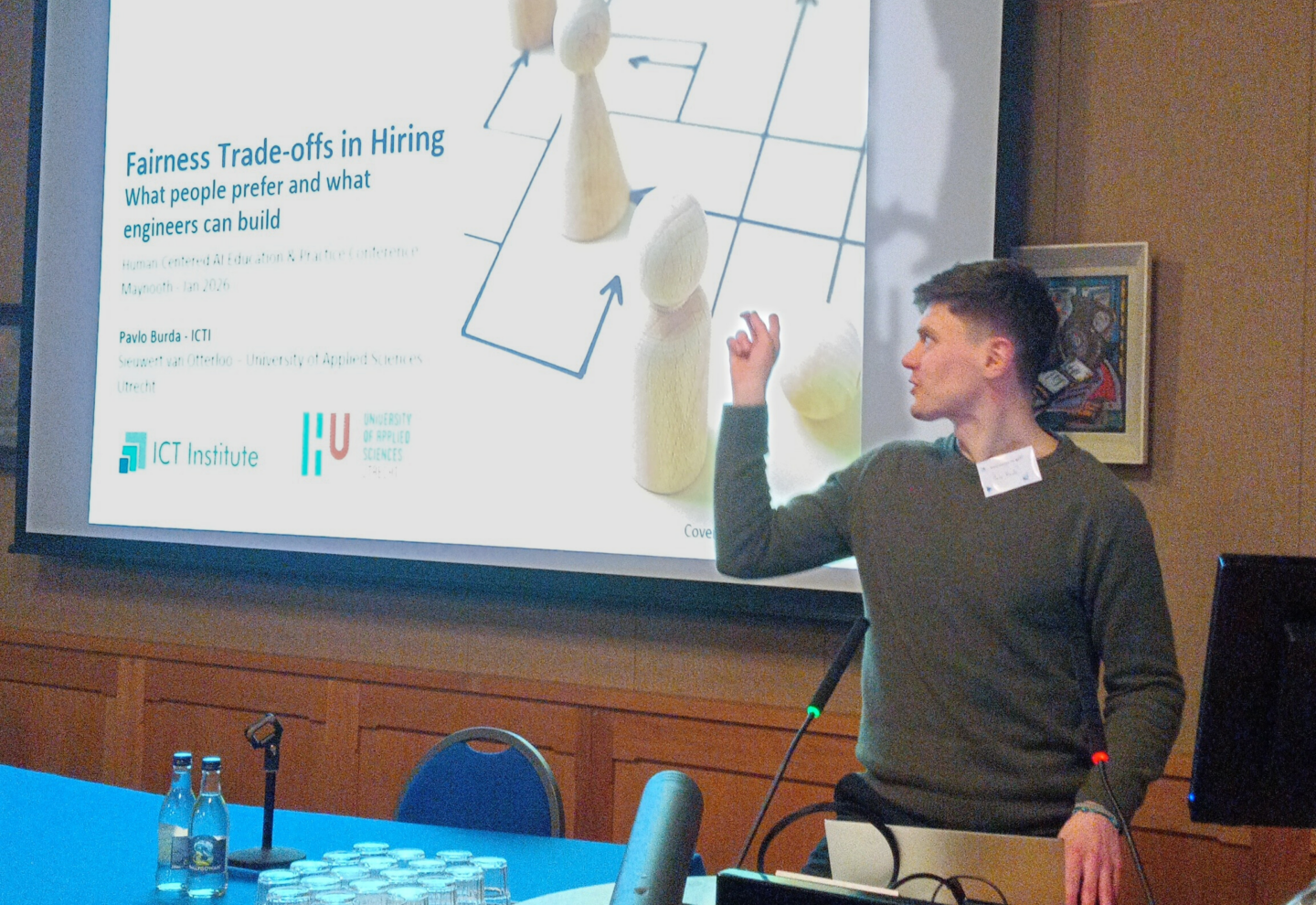
HCAI-ep 2026: Human-Centered AI in Practice
The Human-Centered AI Education & Practice (HCAI-ep) conference focuses on how to design and evaluate AI systems that remain aligned with human values and real-world constraints. This is exactly where many organisations struggle today, especially in light of emerging regulation such as the EU AI Act. At HCAI-ep, we presented our work on fairness requirements…
Pavlo Burda
Call for companies: research projects for VU Business track 2026
For the upcoming 2026 edition of the VU’s Computer Science Bachelor Research projects, ICT Institute is again organising the Computer Science Business Track where we supervise a new cohort of student teams working on real-world, data-driven challenges. We are looking for innovative companies in the Netherlands (from scale-ups to public organisations) with substantial data, AI,…
Pavlo Burda
Fairness definitions explained and illustrated with examples
Burda, P. and Van Otterloo, S 2025. Fairness definitions explained and illustrated with examples. Computers and Society Research Journal (2025), 2 DOI: https://doi.org/10.54822/PASR6281 Abstract Algorithms are increasingly used to make or support decisions, such as recruitment and selection, loan approval, fraud detection, classification and prediction. This has raised important questions on how to assure the…
Sieuwert van Otterloo