

Blog research

Expanded View of Non-nativeness in Cyber Risk Perception
Smeal, W., Camp, L. J. and Păunescu, M. 2026. Expanded View of Non-nativeness in Cyber Risk Perception. Computers and Society Research Journal (2026), 1 DOI: https://doi.org/10.54822/OSZH4063 Abstract With the wider integration of the Internet outside of Western countries, questions have arisen about the role of language in social engineering and trust. Early phishing attacks targeted…
Noah Wazir
VU Computer Science Business Track results 2026
Students of the Vrije Universiteit Amsterdam, bachelor Computer Science, have the option to graduate via the ‘Business Track’. A special graduation program with more team work, more support and real topics from real companies. In 2026 more than 20 students were selected for the business track and completed their this project. Once again we are…
Pavlo Burda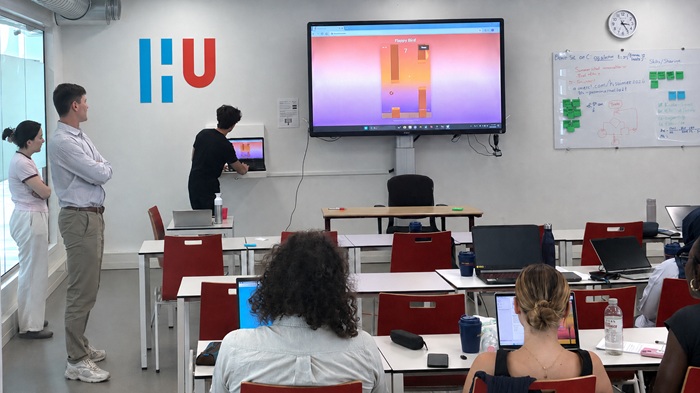
Utrecht Summerschool ‘AI for non-AI students’
Every year the AI research group of the Utrecht University of Applied Sciences organises a summer school for international students that want to visit Utrecht and learn about a new research field. The course is open for students from all fields, and was attended this year by 15 students with backgrounds in law, economics, engineering,…
Sieuwert van Otterloo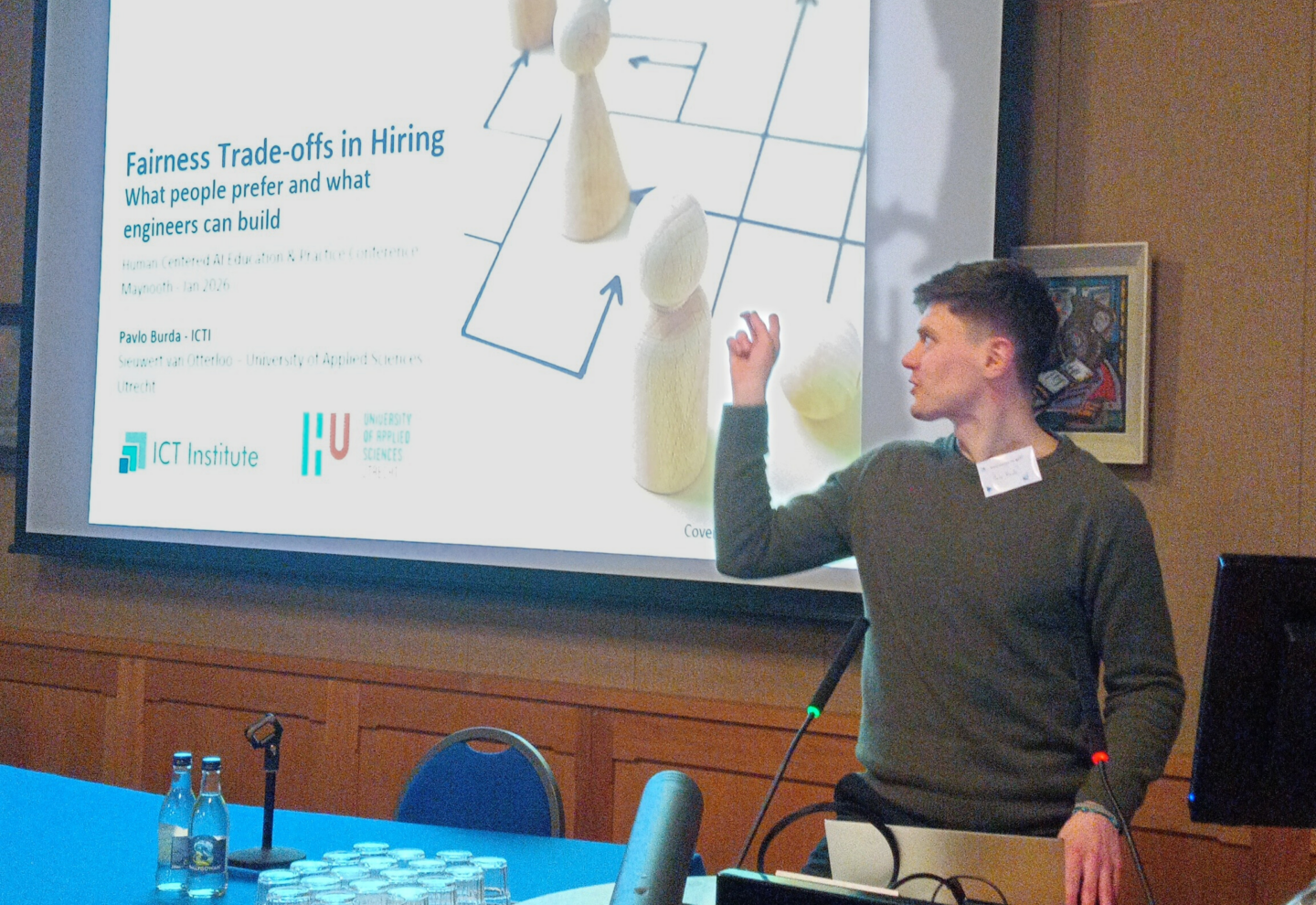
HCAI-ep 2026: Human-Centered AI in Practice
The Human-Centered AI Education & Practice (HCAI-ep) conference focuses on how to design and evaluate AI systems that remain aligned with human values and real-world constraints. This is exactly where many organisations struggle today, especially in light of emerging regulation such as the EU AI Act. At HCAI-ep, we presented our work on fairness requirements…
Pavlo Burda
GDPR, AI and ethics requirements for research
Scientific research must be done carefully and responsibly, with limited use of AI and respect for privacy regulations. This is especially true for applied computer science where researchers collect and analyse personal data. This article explains for which rules apply and how to implement them in practice.
Sieuwert van Otterloo